Awarded Top 4 Education Facility in Australia by the MAGAP (Asia Pacific)


There isn’t one blanket licence that covers every beauty business in Victoria. Requirements can change with the treatments you offer, where you work and the council area your premises are in. That’s why understanding beauty business regulations victoria australia can feel less than straightforward.
If you’re planning your first client appointments, you may be wondering whether you need a licence, council registration or particular premises approvals. The answer depends on your setup and services. A makeup artist, hairdresser and practitioner performing skin penetration shouldn’t assume the same requirements apply.
This guide explains how Victorian health requirements, local council processes and Australian Government responsibilities fit together, and how to check what may apply to your services and location. You’ll also see how practical training can help you develop client-ready skills, while remaining separate from permits, registrations and legal advice. A clear plan for checking the details can help you prepare to launch your beauty business on a professional footing.
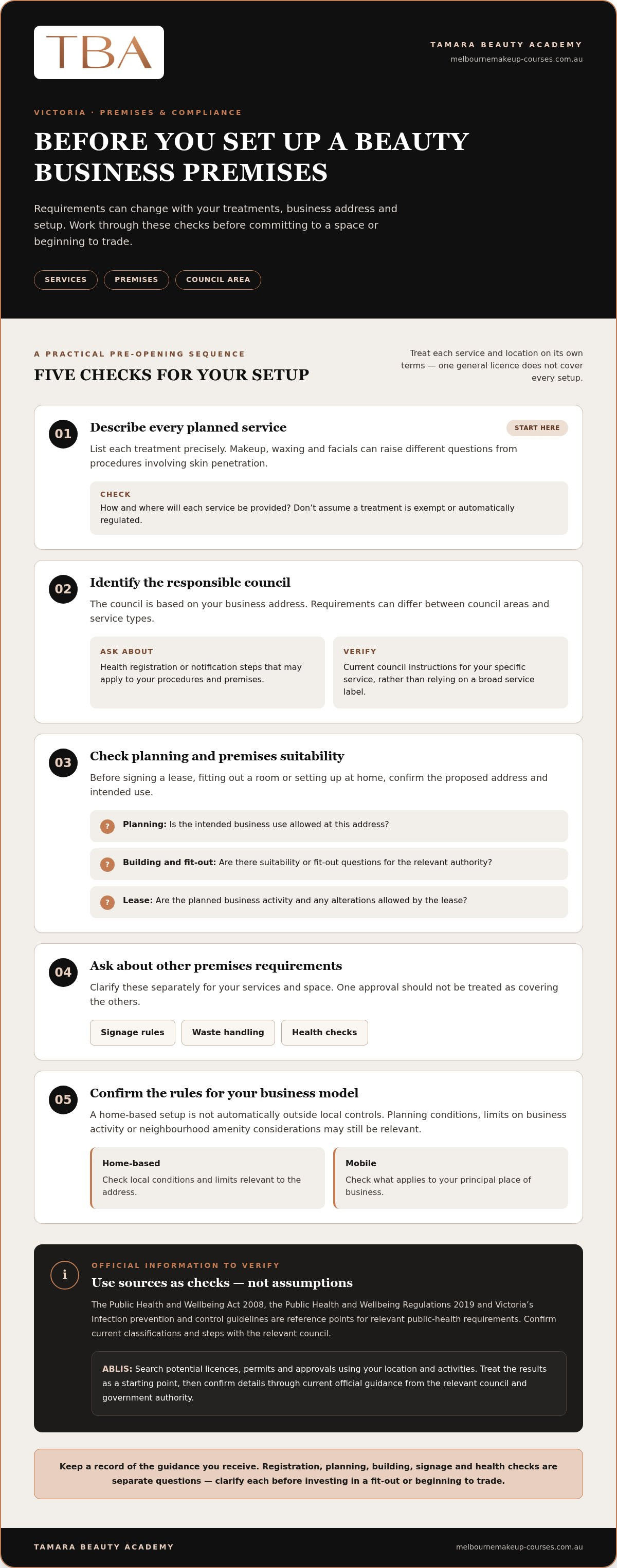
Requirements for a beauty business depend on the services you offer, your premises, your business model and your location. A mobile makeup artist, a home-based waxing business and a salon offering procedures that penetrate the skin may need to investigate different checks. Don’t assume one general beauty-business licence covers every setup.
Regulation can involve business setup, premises and planning, public health and infection control, workplace safety, and consumer obligations. The practical first step for beauty business regulations victoria australia is to describe each planned service precisely, then check the requirements for that combination of treatment, setting and location.
For a broader look at how regulation is discussed around advanced treatments, see Cosmetic surgery regulations in Australia. It’s background reading, not a substitute for checking current requirements with the relevant authorities.
For an Australian beauty-industry overview, watch this video:
No single answer fits every service. Makeup application, waxing and facials raise different questions from a procedure involving skin penetration, including whether health, premises or infection-control requirements apply. Check the current classification and rules for the way and place you’ll provide each service. Don’t assume a treatment is exempt or automatically regulated.
In brief: Your obligations depend on the activity and setting. Check each service against current official guidance for your premises and business model.
Victoria’s Public Health and Wellbeing Act 2008, the Public Health and Wellbeing Regulations 2019 and the state’s infection prevention and control guidelines provide a framework for relevant public-health requirements. Training credentials can build practical capability, but they aren’t the same as an approval or registration. Insurance is a separate risk-management consideration, not a licence.
Your local council is a key starting point for premises-related health registration and local approvals, where applicable. The responsible council is based on your business address, and requirements can differ between council areas and service types. State requirements may also apply, while Australian Government rules can be relevant to particular business activities and obligations.
Use ABLIS to search for potential licences, permits and approvals based on your location and activities. Treat the results as a starting point, not a final legal determination. Confirm details through current official guidance from the relevant council and government authority, especially before committing to premises or taking bookings.
Your local council is central to premises planning, but requirements can vary with your treatments and where you’ll provide them. Before signing a lease, fitting out a room or setting up at home, identify the council responsible for your business address and check its current guidance for your planned services.
In Victoria, the Public Health and Wellbeing Act 2008 and the Public Health and Wellbeing Regulations 2019 are important reference points for public-health requirements that may apply to personal-care activities. The Victorian Department of Health’s Infection prevention and control guidelines provide practical guidance for relevant industries. Requirements can depend on the procedure, so confirm its current classification and any registration or notification steps with the relevant council rather than relying on a broad service label.
Some personal-care procedures may bring health-related registration or notification requirements into consideration. Don’t assume every beauty service follows the same pathway. Describe each procedure clearly, including whether it involves skin penetration, and ask the council how current requirements apply to your premises. Use the Act, Regulations and council instructions as verification points, and keep a record of the guidance you receive.
Registration is only one part of setting up a suitable space. Planning, building, signage and health checks are separate questions, and one approval shouldn’t be treated as covering the others. Clarify each before investing in a fit-out or beginning to trade.
Start with the proposed address and intended use. Confirm permitted land use and any planning requirements with the council, and check building suitability or fit-out questions with the relevant authority. If you’re leasing, review the lease conditions and make sure the planned business activity and alterations are allowed.
Ask about signage rules, waste handling and any premises-specific requirements for your services. A home-based setup isn’t automatically outside local controls. Planning conditions, limits on business activity or neighbourhood amenity considerations may still be relevant. Mobile operators should also check what requirements apply to their principal place of business.
Plan for compliance while developing the practical skills your services call for. If makeup artistry is part of your direction, explore makeup course options to strengthen your craft alongside your compliance research.
A makeup application and a treatment involving skin penetration aren’t automatically subject to the same checks. Products, techniques, equipment and setting all matter. For beauty business regulations victoria australia, describe each service in practical detail before checking its classification with current official guidance and your local council.
Treatment details can change which compliance checks apply. Use the comparison below to guide your research, not as a substitute for a council’s current advice.
| Service | Checks to investigate | Good records to consider |
|---|---|---|
| Makeup application | Business setup, the work location, premises conditions and hygiene practices for products and tools. | Service details, client communications and product information relevant to the appointment. |
| Waxing | Whether the premises or method brings health, hygiene, equipment or waste-handling requirements into scope. | Service and product details, plus any client information relevant to the treatment. |
| Facials | Whether products, equipment or techniques affect health, premises or workplace-safety checks. | Products and techniques used, and relevant client communications. |
| Procedures involving skin penetration | Current treatment classification, council registration or notification requirements, premises suitability and infection-control obligations. | Records relevant to the procedure and any requirements confirmed by the council or regulator. |
Makeup artists should consider the whole setup, not just the technique: where the service takes place, what the premises allow, how products and tools are handled, and how services are described to clients. Check whether local requirements apply to your location and business model. Training can strengthen your practical skills, but it doesn’t authorise a business or replace council checks. If you’re developing your artistry, explore makeup course options as one part of your professional preparation.
They can raise different questions. A waxing method, facial device or procedure that penetrates the skin may change which health, premises and safety checks need investigating. Verify the specific procedure with the council and relevant regulator rather than relying on a general treatment name.
Legal requirements: Confirm applicable registration, premises and public-health obligations through current official guidance. Recommended hygiene practice: Use clear cleaning and product-handling routines, and keep useful service notes. Keep these categories distinct: sensible practice supports professional care, but it doesn’t automatically establish what the law requires.
Turn your research into a dated checklist. The phrase beauty business regulations victoria australia covers possible council, state and Australian Government checks, so work through your actual services and business arrangements rather than relying on a general beauty-business label.
Use specific terms for your services, business structure and premises rather than searching only for “beauty salon”. Compare ABLIS results with current guidance from the council responsible for your address, and follow up on unclear classifications with the relevant authority. Revisit your notes if you add a treatment, change equipment, move premises or alter your business arrangements.
Separate regulatory checks from prudent business planning. Consider whether to register a business name through the relevant Australian Government process, and check Australian Taxation Office guidance on tax, GST and any applicable thresholds. Requirements depend on your circumstances, so verify current rules with the relevant agency rather than assuming every business has the same obligations.
If you engage workers or contractors, check applicable workplace health and safety duties and WorkSafe Victoria guidance. The Australian Consumer Law is also relevant to how businesses represent their services: describe them clearly, communicate prices accurately and avoid misleading claims. Consider appropriate insurance and ongoing professional development as part of managing your business, but don’t mistake either for a universal statutory beauty licence.
Practical education can help you develop your craft alongside these checks. Explore makeup and beauty course options as you plan your next professional step.
Compliance is a practical part of turning creative work into a professional service. Once you’ve mapped out your treatments, premises and relevant checks, keep building the skills that help you deliver each service with care and confidence. Thoughtful preparation lets you pursue your goals while planning for the rules that apply.
Training and regulatory research serve different purposes. Hands-on learning can develop technique, client communication and professional confidence, but completing a course doesn’t grant a government licence or replace council approvals, registrations or other legal checks. Keep both tracks in view as you plan your next move in the beauty industry.
Choose learning that aligns with the services you intend to offer. Practising application techniques, refining your approach and building confidence in client interactions can support your professional development. Your compliance checklist addresses the separate requirements for your business and premises. If makeup artistry is your chosen direction, a focused makeup course can help strengthen your craft as you check the rules that apply to your setup.
Tamarua Beauty Academy is a Melbourne-based training institute offering on-site and live-online beauty courses. Its courses span makeup and other beauty disciplines, with options from beginner to advanced. Choose a pathway that matches your goals and the skills you want to develop for the services you plan to offer.
Start with the foundations you want to master, then pair your learning plan with practical compliance steps: verify requirements for your activities and address, keep notes of official guidance, and revisit your checks if your plans change. This gives your career development direction without confusing vocational learning with regulatory approval.
Ready to build your makeup skills? Explore makeup courses at Tamarua Beauty Academy and take a considered next step towards your professional goals.
Starting a beauty business is easier to plan when you break the research into clear steps. The key lesson from beauty business regulations victoria australia is that requirements can vary with your services, premises, business model and council area. Map out each treatment, check current official guidance for your location, and keep a record of the advice and application steps relevant to your setup.
Build your practical capability alongside that compliance work. Training can help you refine technique, strengthen client communication and grow confidence, but it doesn’t replace permits, registrations or legal checks. Choose learning that supports the services you plan to provide.
Tamara Beauty Academy is a Melbourne-based institute founded in 2010, with on-site and live-online learning options from beginner to advanced. Aspiring beauty professionals can also access free consultations and learner support as they consider their next steps.
Explore practical makeup courses and take your next creative step. Keep your plans purposeful, your research current and your ambition in view. A confident professional journey starts with one well-informed step.
There isn’t one blanket beauty-business licence for every service in Victoria. Requirements can depend on the treatments you provide, your premises, business model and location. Some activities may involve council registration or other approvals, so check your exact services against current council and government guidance. Use ABLIS as a starting point, then confirm relevant requirements with the responsible authority before opening or changing your service menu.
It depends on the service and setting, so don’t assume makeup application is automatically exempt from council requirements. Check with the council responsible for your business address and describe how and where you’ll provide the service, including whether you’ll work from a salon, home or mobile setup. Council processes can vary across Melbourne city, the eastern and western suburbs, Brimbank, Hobsons Bay, Maribyrnong, Melton and Wyndham.
Waxing and facial businesses may need to meet council registration or premises requirements, depending on the activities and location. Products, equipment and techniques can affect which checks are relevant. Contact the council responsible for your business address and explain each treatment rather than relying on a broad “beauty therapy” label. Check current Victorian public-health guidance too, and keep a dated record of the information and application steps provided.
Yes, a home-based beauty business may be possible, but working from home doesn’t automatically remove council or premises requirements. Check whether the proposed business use is allowed, and whether planning conditions, building suitability, signage, waste handling or local business conditions apply. Requirements may also relate to the space used, non-resident employees and neighbourhood amenity. Confirm the rules with the council responsible for your home’s address before setting up.
Operating without an approval that applies to your business could lead to council or regulatory action, and penalties may apply under relevant laws. The consequences depend on the requirement and circumstances, so don’t rely on assumptions or general advice. If you’re unsure whether you need to register or obtain a permit, pause plans that depend on it and seek current guidance from the responsible council or regulator before providing the relevant service.
There isn’t one qualification requirement that applies to every beauty service, but training can help build practical ability and client confidence. Certificate IV and Diploma-level beauty therapy qualifications are common pathways for beauty therapy work. Check whether your intended role or treatment has specific requirements. A course supports skill development, but it doesn’t automatically provide council registration, a permit or legal approval. Choose learning that suits the services you plan to offer.
Insurance isn’t a universal beauty-business licence, and whether a particular policy is legally required depends on your circumstances and activities. However, insurance is a prudent risk-management consideration. Check your lease, contracts, business arrangements and any rules relevant to your services, and get advice on suitable cover for your situation. Keep insurance decisions separate from regulatory checks: holding a policy doesn’t replace any registration, permit or premises approval that applies.