Awarded Top 4 Education Facility in Australia by the MAGAP (Asia Pacific)


The course with the longest list of hairstyles isn’t necessarily the one that will prepare you best for real bookings. Event hair styling training should build more than technique knowledge: confident, polished work comes from practising each look and receiving useful feedback along the way.
If you’re unsure whether a course covers the styles you want to offer, or whether you’ll get enough hands-on guidance, you’re asking the right questions. Look for a learning path that suits your goals and fits around work or other commitments, with clear information about what you’ll practise and what you can expect to learn.
This guide compares event hairstyling course formats and learning support, and explores practical skills to look for, from creating soft updos and waves to preparing styles for a client’s occasion. You’ll also find questions to ask about practice, feedback and course details before enrolling. Whether you’re starting fresh or building on existing skills, these checks can help you choose a realistic next step towards offering event hair services.
Event hair styling training helps you develop the knowledge and practical ability to create polished hairstyles for special occasions and client bookings. It can introduce the process behind a finished look, from understanding what a client wants to preparing and styling their hair, while building your confidence through guided learning.
Event styling has a different focus from the broader hairdressing profession, which includes a range of roles and techniques. Explore this history of hairdressing for wider context, and check each course’s actual scope. A title alone won’t tell you how much practice or feedback is included, or what credential you’ll receive.
Here’s a short styling demonstration to give you a visual starting point. As you watch, notice how the stylist shapes and refines the look. A video can show a technique, but it isn’t a substitute for practising and receiving feedback.
Aspiring freelance stylists may want to explore occasion work, while beauty professionals and makeup artists might be considering how hairstyling could complement their existing skills. Beginners can also use training to test their interest in beauty work and learn the foundations before deciding on a direction.
For any learner, the appeal is the blend of creativity and craft: translating an idea into a considered look takes both an artistic eye and practical technique. Training can help you build those skills, but it can’t promise bookings, employment or income.
An event look is shaped around a particular occasion, the client’s preferences and the overall effect they’re hoping to create. A bridal style, for instance, may need to complement the client’s outfit and wedding aesthetic. A look for another special event may call for a different level of polish or personality.
Consultation, preparation and finish work together. A stylist first clarifies the desired look and relevant preferences, then considers how to prepare the hair and create a finish that suits the plan. When comparing courses, ask what learners actually practise, how tutors give feedback and how progress is assessed. These details reveal more than a course name alone.
A polished occasion style is built through a sequence of decisions, not a single finishing move. As you compare event hair styling training, look for clear information about which skills you’ll practise, how often you’ll work hands-on and whether a tutor will give feedback on your technique. Treat the points below as questions to ask, not guaranteed inclusions in any particular course.
For a broader occupational reference, O*NET OnLine outlines practical skills for hairstylists. Use it as general context, then check how a provider applies its curriculum to event styling.
Ask whether learning activities include client consultation scenarios. Can you practise clarifying someone’s preferred look, the event setting and the finish they have in mind, then explain the styling approach you’d suggest? These conversations help turn a visual idea into a practical plan rather than relying on assumptions.
Hair texture, length and condition can influence which approaches are suitable and what preparation may help. A course that invites learners to assess these factors and discuss alternatives can develop thoughtful decision-making alongside creative flair. Find out whether practice includes adapting a plan when the client’s hair or preferences call for a different approach.
Ask what foundational techniques you’ll practise, such as controlled sectioning, shaping and creating a secure finish that remains comfortable to wear. If thermal tools are relevant to your goals, check whether their handling is covered, how practice is supervised and what equipment you’ll need. Don’t assume these details from the course title alone.
Finishing is more than making a style look complete. It can involve checking the overall shape, tidying visible sections and considering how the result looks from different angles. Ask whether tutors observe your work and give specific, actionable feedback, so you can understand what to adjust on your next attempt.
Event styling brings consultation, considered technique and a refined finish together to create a look that feels right for both the client and the occasion.
Use that principle to guide your questions before enrolling. If you’re exploring your options, you can review hair styling course information and ask which current course details align with the practical skills you want to develop.
The best format depends on how you learn, how much flexibility you need and how you’ll get opportunities to practise. Tamarua Beauty Academy offers on-site and live-online short courses across its training portfolio. Confirm which formats are currently available for hair styling and whether an event-focused course includes guided practical work. The academy also offers one-on-one training and workshops, but check whether a current hair styling option suits your specific learning goal.
Use this comparison as a prompt for questions rather than a promise of what any course includes:
| Format | What to compare | Ask the provider |
|---|---|---|
| On-site | In-person demonstrations, access to coaching and opportunities to practise during class. | Where and when does training run, and how much individual feedback can learners expect? |
| Live-online | Convenient access to live demonstrations and the ability to ask questions remotely. | Can learners practise while connected, receive corrections and see techniques clearly? |
| One-on-one | If available, focused attention that may suit a specific technique or learning goal. | Is individual coaching offered, and what practice and feedback are included? |
In-person learning can make it easier to observe a demonstration up close and ask for help as you practise. Live-online sessions may suit learners balancing study with work or other commitments, especially if the provider explains how practical work and feedback are handled. Individual coaching may help you concentrate on a particular goal, if it’s available for the course you’re considering. Melbourne learners should check the location, timetable and current delivery options before deciding.
Convenient access can make learning easier to fit into your life, but it doesn’t tell you how much guided practice you’ll receive.
Ask how you’ll work through each technique: will you practise during a session, show your work to a tutor and receive specific corrections? Find out whether models, tools or other practice materials are provided, or whether you need to organise them yourself. Also clarify class size, opportunities to ask questions and what learner support is available after training.
As you compare event hair styling training options, focus on the details that affect your learning experience: practical work, feedback, timetable and support. These are more useful measures of course fit than delivery mode alone, and they can help you choose a format that works with your goals and commitments.
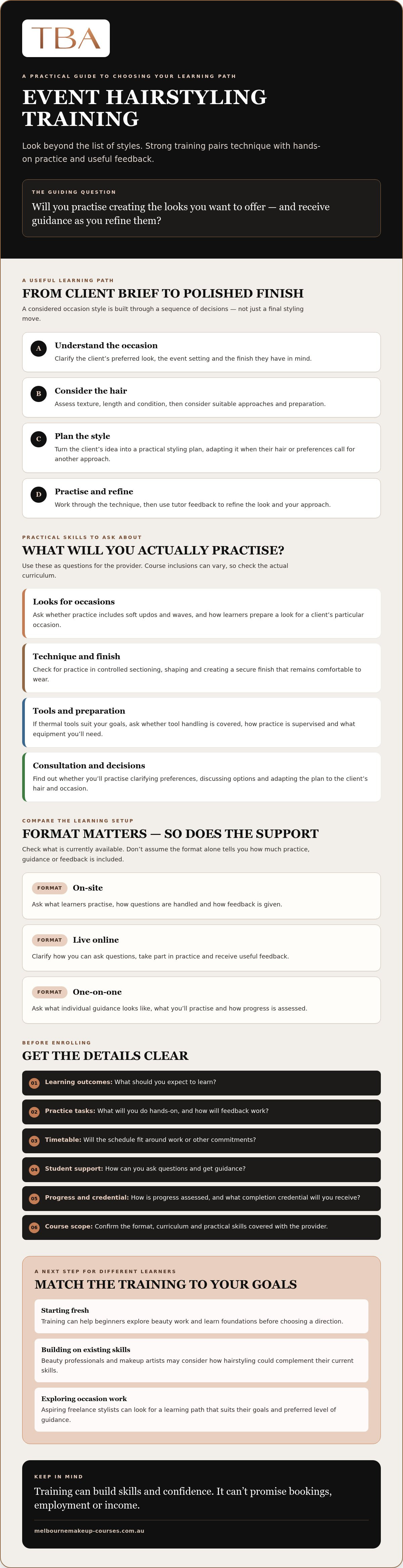
A course title can sound promising, but the details show whether the learning experience fits your goals. Before enrolling in event hair styling training, ask the provider to describe what you’ll practise, how you’ll receive feedback and what you can expect to take away. Use this checklist to make a clear comparison.
Be specific: “What will I practise myself?” and “How will a tutor review my work?” are more useful than relying on broad phrases such as practical training. Clarify how demonstrations, supervised practice and feedback are organised, and whether you’ll have the equipment and materials needed to take part. If an important skill for your goals isn’t included, ask whether it sits outside the course scope.
Before committing, make sure the course’s current format and schedule work for you, and that you understand any requirements for participation or practice. Tamara Beauty Academy offers hair styling courses, but confirm the current event-focused curriculum, delivery options and completion credential directly with the academy. A free consultation can help you clarify fit and learning goals without relying on assumptions.
To compare what’s currently available, review the hair styling course options and ask which details match the skills and support you’re looking for.
Your next move doesn’t need to be a major leap. Start by matching your goal with the learning format and level of guided practice you want. You might be building foundations from scratch, adding hairstyling to your existing beauty skills or developing a particular technique. A clear goal makes it easier to compare course options and ask useful questions.
Tamara Beauty Academy is a Melbourne-based provider of hair styling courses. If you’re considering event hair styling training, confirm directly with the academy whether a current course covers event work, what practical components it includes and how feedback is provided. Also ask about the exact completion credential, so you understand what the course does and doesn’t represent.
Choose one skill area you’d like to develop, then write down the questions that matter to you. For example: “Will I get to practise this technique?” or “How will I know what to improve?” If you’re a makeup artist considering complementary study, explore the makeup course options alongside hair styling training as you think about the services you’d like to develop.
Keep your plans grounded in practice. Building a portfolio takes time and depends on the opportunities available to you, the work you create and your individual circumstances. Training can support skill development, but it can’t guarantee future bookings, employment or income.
For learners in Melbourne, practical details matter too. Confirm the current location, timetable and delivery format directly, and ask whether the training is suitable for your experience level. If event styling is your focus, check which event-specific techniques are covered, how learners practise them, whether feedback is provided and what support is available as you learn. This is useful whether you’re in Melbourne city, the Eastern suburbs or the Western suburbs, or elsewhere in Victoria.
These questions can help you decide whether a course aligns with your goals before you commit. Tamara Beauty Academy offers consultations and student support, so you can ask about fit and clarify current course details rather than relying on assumptions.
Ready to explore your options? Explore available beauty courses and take a considered next step towards developing your skills.
The right event hair styling training should match the work you hope to do, the way you prefer to learn and how much guided practice you want. Before enrolling, look beyond the course name: confirm what you’ll practise, how feedback works and which completion credential you’ll receive.
Tamara Beauty Academy is a Melbourne-based beauty training institute offering on-site and live-online short courses across its training portfolio. Check directly whether either format is currently available for hair styling, and ask about event-specific course content and practical support so you can make an informed choice.
Building your skills is a journey, and a thoughtful first step can bring your creative goals into clearer focus. Explore available courses and find out which learning option may suit your next step.
Event hair styling training can help you develop skills for creating occasion-ready looks, from interpreting a client’s preferences to planning preparation and finish. Course content varies, so ask whether you’ll practise specific techniques, work through consultation scenarios and receive feedback on your styling. Check the stated learning outcomes rather than assuming a course covers every event style. Also confirm the practical components and the exact completion credential before enrolling.
Yes, some training is designed for beginners, while other courses suit learners with existing skills. Check the entry requirements and ask whether the course starts with foundational techniques or expects prior experience. If you’re new to beauty work, look for clear demonstrations, supported practice and useful feedback. Tamara Beauty Academy offers training across different levels, but confirm which current hair styling course is suitable for your experience and goals.
Live-online learning can include demonstrations and opportunities to ask questions, but how much practical experience you gain depends on the course design. Before enrolling, ask whether you’ll practise during sessions, how a tutor can observe your technique and what feedback you’ll receive. Check whether you need to supply tools or practice materials. Tamara Beauty Academy offers live-online courses across its training portfolio, but confirm current availability and practical arrangements for hair styling.
Compare the course content, practice, feedback, timetable, delivery mode and credential, then choose what best fits your goals. Learners across Victoria, including Melbourne city, the Eastern suburbs, the Western suburbs, Brimbank, Hobsons Bay, Maribyrnong, Melton and Wyndham, can ask providers about location and access as well. Tamara Beauty Academy is Melbourne-based. Confirm directly whether a current hair styling course covers event work and which format is available.
Don’t assume a short-course certificate is the same as a full hairdressing qualification, or that one credential automatically determines what services you can offer. Event styling focused on styling, rather than cutting or colouring, is distinct from broader hairdressing training. Requirements can depend on the work and location, so check relevant Victorian council information for your business plans and verify any course recognition claims before relying on them professionally.
Ask what you’ll learn and practise, how demonstrations and supervised practice work, and how tutors assess progress and give feedback. Confirm the timetable, delivery format, course requirements and what tools or materials you need to bring. Request the exact credential title and clarify any recognition claims. If you’re considering a provider in Melbourne, check its current location and ask whether its hair styling course includes the event-focused skills you want to develop.
Training may help you develop relevant hairstyling skills to consider alongside your existing beauty services, but it can’t guarantee bookings, income or business success. Think about the styles you’d like to offer, the practice you need and how you might develop a portfolio that reflects your work. Your next steps will depend on your experience, goals and circumstances. Choose training that offers a realistic opportunity to build and refine your skills.