Awarded Top 4 Education Facility in Australia by the MAGAP (Asia Pacific)


What if the best first step towards a home beauty business isn’t buying equipment, but deciding which services your skills and space can support? If you’re searching “how to start a home beauty business melbourne”, it’s natural to wonder where to begin. Council requirements can depend on your services, premises and location.
A strong launch starts with a clear service offer, then builds around a suitable setup and the local checks that apply to your plans. You don’t need every detail solved today. Working through the steps in order can make the process more manageable and help you avoid spending on equipment before you know what you need.
This guide explains how to shape your services, identify suitable training and prepare a client-ready space at home. You’ll also learn which official Victorian and local council guidance to review before taking bookings, alongside the practical routines that help you build confidence and run your business with care.
You can turn a beauty skill into a considered Melbourne home-business plan by starting with what you do well, who you want to serve and what your space can comfortably support. The answer to how to start a home beauty business melbourne begins with a focused offer, not a menu of every treatment you might eventually learn.
Use this launch sequence to give your idea a practical shape:
A Beauty salon industry overview can help you understand the range of services in the sector. Your first offer, however, should reflect your strengths, available space and business plans.
For a visual sense of the choices involved in setting up at home, watch this home salon tour:
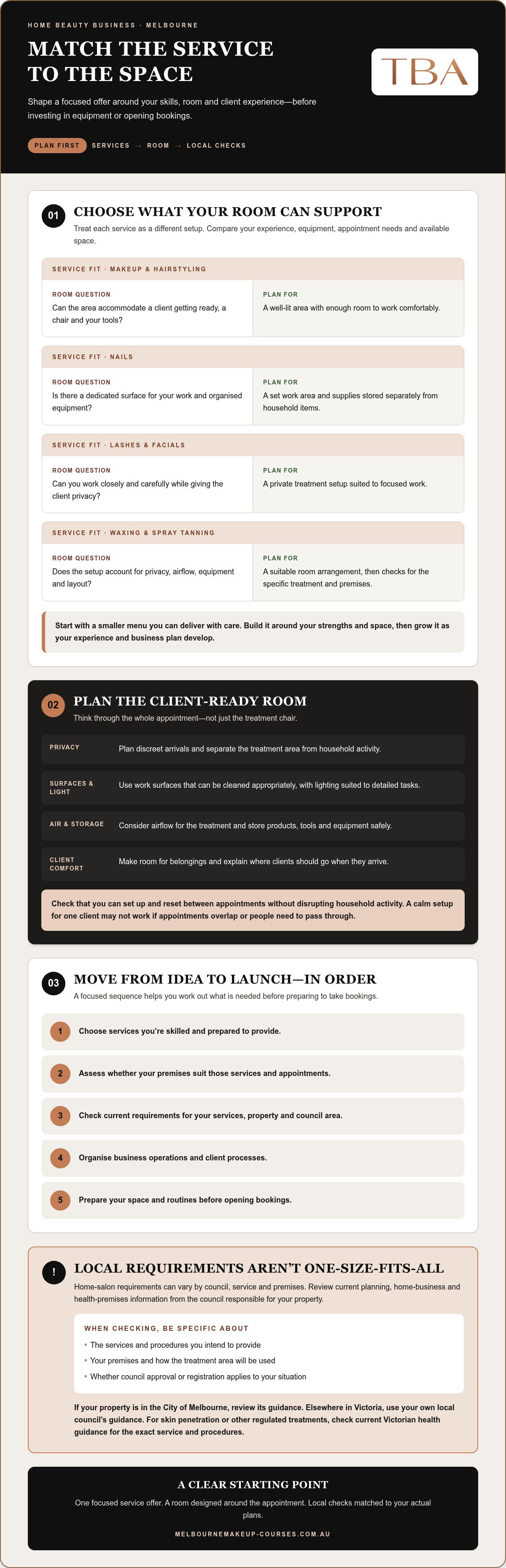
Makeup and hairstyling may suit a well-lit area with room for a chair, tools and a client to get ready. Nail services need a dedicated work surface and organised equipment. Lashes and facials call for a setup that supports close, focused treatment and client privacy. Waxing and spray tanning also require careful consideration of privacy, ventilation, equipment and room layout. Treat these as planning prompts, not a substitute for checking current requirements, which can vary with the treatment and premises.
Compare each service against your experience, equipment, appointment length and available space. For example, consider whether you can set up and reset the room between appointments without disrupting household activity. A smaller menu can make it easier to refine your technique, prepare the space and deliver a consistent experience. Before committing, check relevant council guidance and Victorian health information for the services you intend to provide.
Think about the needs and occasions your clients bring: event makeup, bridal preparation, a spray tan before a celebration, or a regular beauty appointment. Then consider the experience they need. Will they book individually, need extra preparation time, or expect privacy and clear arrival instructions? These details help you design an appointment flow that fits your home and clientele.
Keep your service menu concise and explain what each appointment includes, how to book and how clients should prepare. For makeup-focused readers, exploring makeup course options can help you build practical skills as you shape your offer. Choose a starting point you can deliver with care, then grow your menu as your experience and business plan develop.
A client-ready home salon is more than a treatment chair in a spare room. The layout needs to support the service, keep household life separate and help clients feel comfortable from arrival to departure. Your plans for makeup, spray tanning, nails or another treatment will shape what the space needs.
Melbourne home-salon requirements can vary by council, service and premises, so check the rules that apply to your specific setup. This is an important part of working out how to start a home beauty business melbourne. If your property is within the City of Melbourne, review its guidance. If you’re elsewhere in Victoria, use the guidance from your own local council, including the relevant council for Melbourne city, the Eastern suburbs, Western suburbs, Brimbank, Hobsons Bay, Maribyrnong, Melton or Wyndham.
Start by imagining the full appointment, not just the treatment itself. A client needs a clear, comfortable path to the treatment area, while you need room to work and keep supplies organised. Consider:
Keep treatment supplies separate from household items, and make sure equipment can be stored securely between appointments. Be realistic about the space you have: a setup that feels calm for one client may not work if appointments overlap or household members need to pass through. Plan the client pathway around privacy and comfort, as well as your own working routine.
Before operating, check your council’s current planning, home-business and health-premises information. Don’t assume a rule that applies in one Melbourne suburb applies across the city or elsewhere in Victoria. When reviewing the guidance, describe your intended services and premises clearly, and check whether council approval or registration applies to your situation.
For procedures involving skin penetration or other regulated treatments, review current Victorian health guidance for the exact service and procedures you plan to perform. The Victorian Government’s Infection Prevention and Control Guidelines for Hair, Beauty, Tattooing and Skin Penetration Industries are a key reference to consult alongside applicable requirements.
Your property arrangements matter too. If you rent, check your tenancy conditions; if the home is part of an owners corporation, review its rules. Consider whether your insurance arrangements address business activity at home. These checks can help you identify constraints before investing in a fit-out or accepting bookings.
Once your premises plan is taking shape, practical training can help you feel more assured in the services you intend to provide. Explore beauty course options as one part of preparing for a confident, client-focused launch.
Once your service and premises plans are taking shape, give equal care to the business foundations behind them. Structure, tax, registration and insurance are connected, but they’re separate decisions. Business registration, tax records and insurance each serve a different purpose, so plan and review them separately.
If you’re working out how to start a home beauty business melbourne, compare the broad implications of operating as a sole trader or through a company. Neither structure is the automatic choice for every beauty professional; your circumstances, plans and responsibilities matter. Use official Australian guidance and seek qualified advice if you need help applying it to your situation.
Investigate whether you need an Australian Business Number (ABN) through the Australian Business Register, and review the Australian Taxation Office’s guidance on business income, record keeping and tax obligations. Requirements can depend on your circumstances, so use official sources rather than assuming another operator’s setup will suit you.
Set up a straightforward record-keeping routine before bookings begin. Keep organised records of appointments, income, business expenses and client communications. Store consent and service records securely, and make sure you can retrieve relevant details when you need them. Good systems make it easier to review how the business is operating and keep client care consistent.
Public liability and professional indemnity are different categories of cover to research. Public liability generally relates to claims involving third-party injury or property damage; professional indemnity generally relates to claims connected with professional services or advice. Policy terms vary, and neither category should be assumed to cover every treatment or circumstance.
Use this comparison as a starting point for your research, not as legal, tax or insurance advice:
| Area to consider | Broad questions to explore |
|---|---|
| Sole trader | How would this structure fit your business plans and personal circumstances? |
| Company | What responsibilities, administration and costs could apply to operating through a company? |
| Public liability | How does the policy address client visits, the premises and potential third-party injury or property damage? |
| Professional indemnity | How does the wording relate to your treatments, procedures and potential claims about professional services? |
Before operating, read policy wording carefully and consider your treatments, equipment, client visits and any conditions attached to your home insurance. If you rent or live in an owners corporation property, review the relevant property arrangements too. This groundwork supports the creative side of your launch with clear, dependable business routines.
A thoughtful client experience is built through small, consistent steps: clear information before an appointment, a calm welcome at home and a well-prepared treatment space. As you plan how to start a home beauty business melbourne, map the full booking journey, not just the time spent performing a treatment.
Set up one straightforward process clients can follow from first enquiry to follow-up. Before opening bookings, prepare:
A reminder before the appointment can reinforce the time, address and preparation instructions. At home, consider practical details such as access, pets, household movement and where a client can put their belongings. A predictable welcome helps people feel at ease and lets you focus on the service.
Build a written routine around the exact treatment you provide. Cleaning the work area between appointments, hand hygiene, handling tools appropriately and storing products safely are useful areas to plan, but the correct procedures depend on the service and equipment. Don’t assume one routine suits every treatment.
For Victorian beauty businesses, consult the current Infection Prevention and Control Guidelines for Hair, Beauty, Tattooing and Skin Penetration Industries and other relevant Victorian health guidance. Follow the instructions that apply to your specific procedures, and revisit them if your services or products change.
Client care starts before treatment. Depending on the service, consultation may involve discussing relevant sensitivities, allergies, preferences or contraindications. Explain the planned service, invite questions and record informed consent where appropriate. Keep notes secure and limit them to information relevant to the appointment and client care.
Before your first booking, rehearse the process from enquiry through room reset. That run-through can reveal missing instructions or awkward transitions while there’s still time to refine them. If practical training would help you strengthen technique and service confidence, explore beauty courses in Melbourne as part of your preparation.
You’ve mapped out the foundations of how to start a home beauty business melbourne: choose a focused service, assess your premises, check local requirements, organise your business administration and prepare for clients. Now bring those plans together with the practical skills that help you deliver each appointment confidently and consistently.
Strong technique supports more than the finished result. It helps you work with care, communicate clearly about a service and build reliable routines as you gain experience. Practical learning can also help you identify where you’d benefit from more practice before welcoming clients. Training is one part of business readiness, alongside council checks, registrations, hygiene procedures and other responsibilities.
Tamarua Beauty Academy is a Melbourne-based beauty training institute founded in 2010, with on-site and live-online training options. Learning pathways span beginner to advanced levels, with flexible scheduling, student support and free consultations available to help you consider your next learning step. Choose training that aligns with the service you’re shaping, whether you’re building makeup technique or developing skills in another beauty discipline.
Hands-on practice gives you space to refine your process, strengthen consistency and grow more comfortable communicating with clients. It doesn’t replace the need to check what applies to your premises and services, or to establish sound business and client-care routines. Treat skill development and business preparation as complementary steps.
Turn the ideas into a short plan you can work through at a realistic pace:
Small, considered steps can turn a promising idea into a confident launch plan. If you’re ready to build your practical skills, Explore beauty courses and training options and find a learning pathway that supports your next step.
A confident launch begins with a focused service offer and a home setup suited to your clients and treatments. Check the local and Victorian guidance that applies to your plans, then put sound business records, booking processes and hygiene routines in place before opening appointments. Those steps give your creative ambition a practical foundation.
If you’re still shaping your plan for how to start a home beauty business melbourne, remember that developing your skills is part of the journey too. Practical training can strengthen your technique, consistency and confidence, while council checks and business responsibilities remain essential parts of preparing to operate.
Tamara Beauty Academy is a Melbourne-based beauty training institute founded in 2010, offering on-site and live-online short-course options. With beginner-to-advanced learning, flexible scheduling and free consultations, there are supportive ways to explore your next step. Explore beauty courses and take your next step.
Start with one service, make a clear plan and build your capability one considered step at a time. Your home beauty business can grow from the craft you’re ready to share.
You may need council registration or planning approval, depending on your services, premises and council area. In Victoria, beauty therapy, hairdressing and skin penetration services can involve local health registration requirements, while home-business planning checks are a separate consideration. Check current guidance with the City of Melbourne or your own council before operating, and review Victorian health guidance for the exact treatments you plan to provide.
Possible services include makeup, hairstyling, nails, lashes, facials, waxing and spray tanning, provided your skills, room setup and applicable requirements support them. Consider privacy, equipment, appointment time and how clients will access the space. Requirements can differ by treatment, especially where procedures involve skin penetration or other regulated steps, so check current Victorian and local council guidance for each service before adding it to your menu.
It may be possible, but check your tenancy agreement and discuss the proposed business with your landlord before making changes or inviting clients to the property. Also review any owners corporation rules if they apply. Separately, confirm the relevant council’s home-business and premises requirements for your services and address. Keep a record of any permissions and checks so your plans account for both property arrangements and local requirements.
Whether you need an Australian Business Number depends on your circumstances and whether your activity meets the criteria for an enterprise. Check your eligibility and application guidance through the Australian Business Register, then use Australian Taxation Office information to understand tax and record-keeping responsibilities. An ABN is one part of setting up; it doesn’t replace any council checks, registrations or other requirements that may apply to your services or premises.
Research public liability and professional indemnity insurance as distinct types of cover. Consider the treatments you provide, equipment you use, client visits to your home and any conditions in your home insurance or property arrangements. Read policy wording carefully, since coverage and exclusions vary. The right cover depends on your business and circumstances, so compare policies and seek qualified advice if you’re unsure what their terms mean for your setup.
A course isn’t a universal legal prerequisite for every beauty service, but relevant practical training can help develop technique, consistency and confidence with clients. Requirements may also depend on the treatment, council and insurer, so check those separately. Tamara Beauty Academy offers Melbourne-based on-site and live-online learning from beginner to advanced levels, with flexible scheduling and student support. Training supports business readiness, but it doesn’t replace council checks or other responsibilities.
Start with a clear service menu that explains what each appointment includes, how to book and how clients should prepare. Share your work and business information through suitable online channels, and ask satisfied clients to recommend you. Make your location clear to the people you want to reach across Victoria, including Melbourne city, the Eastern suburbs, Western suburbs, Brimbank, Hobsons Bay, Maribyrnong, Melton and Wyndham. Consistent communication and a comfortable client experience help build trust.