Awarded Top 4 Education Facility in Australia by the MAGAP (Asia Pacific)


A makeup masterclass can look impressive without teaching the skills you actually want to develop. A session focused on applying makeup to yourself may be very different from training designed to build professional artistry skills. To choose well, compare the class level, learning outcomes and format with your goals and experience.
You might be starting with the basics, refining your own routine or building skills for future work. Before enrolling, check how much practical instruction is included, whether the class suits your current level and what support you’ll receive as you practise.
This guide explains how to compare makeup masterclass styles, learning outcomes and training quality in 2026. Use the questions and checklist to assess the format, curriculum, hands-on practice and feedback before you book. That way, you can choose training that fits your ambitions and gives you a clear next step.
A makeup masterclass usually focuses on particular techniques, skills or learning goals. It may teach you how to apply makeup to yourself or help you develop artistry skills for creating looks for others. The title alone doesn’t tell you the class level, teaching format or what you’ll learn, so look for a course description that names the intended learner and outcomes.
That distinction matters when you’re deciding what training to invest in. A personal makeup lesson may help you get more from the products you already own, while professional training may focus on adapting techniques to different faces, preferences and briefs. For an overview of what a makeup artist does across fields such as film, fashion and theatre, compare the work you hope to pursue with the class’s stated goals.
Self-application classes usually focus on your own routine: choosing and using products, practising techniques and becoming more confident applying makeup. Professional development has a broader aim. It may involve building adaptable skills and learning to interpret a brief rather than repeating one look. Personal makeup education helps you apply makeup to yourself; professional training develops skills for creating looks for others. Check who the class is designed for before enrolling.
It can be, but check the advertised level and how the material is taught. Some classes introduce foundational concepts; others expect learners to know them already. If you’re new to makeup artistry, ask what experience is expected and whether the instructor explains core ideas before moving on to more advanced techniques. Asking for guidance is a practical part of choosing training.
Also check what you’ll need for practice. Ask whether you can use your own products, whether you need to bring particular tools and if anything is supplied. This helps you plan your kit and budget before enrolling, rather than assuming the class includes materials or that you’ll need to buy a full set of products.
A compelling title can catch your eye, but clear learning outcomes show whether a class matches your goals. Look for details about the actual techniques rather than assuming a masterclass covers every aspect of makeup artistry. Possible topics include complexion preparation and application, colour choice, blending, eye looks or selecting products for a particular finish. These are examples to ask about, not guaranteed parts of every class.
Match each topic to a skill you want to practise. If you’re interested in creating a particular look, ask whether the class covers the product choices and application steps involved. A clear outline can also help you avoid buying tools or products before you know what the training requires.
A demonstration is easier to follow when the artist breaks a technique into stages, explains the choices behind each step and shows how the details work together. Watching is only one part of learning. Practice lets you try the technique, while feedback can help you identify what to adjust. Watching shows you a technique; practising it and receiving constructive feedback helps you develop a skill you can repeat. Ask how much practice time is included and whether you’ll receive individual guidance.
Useful product knowledge goes beyond a list of recommended buys. Ask whether the instruction explains how shade selection and skin undertones affect complexion choices, or how to choose products for a particular finish. Tool advice is most useful when it relates to the techniques being taught, so you understand what a brush or applicator is used for and when.
Before enrolling, check whether you’re expected to bring your own products or tools, and ask what alternatives are available if you don’t have the items suggested. This helps you plan your kit without assuming you need to purchase everything upfront. If structured learning feels like the right next step, explore makeup course options and compare them with the skills you want to practise.
The best format for you depends on what you want to practise, how much guidance you need and how much time you can set aside. A makeup masterclass may focus on one defined skill, while other options can offer broader or more independent learning. A single session doesn’t have to cover everything. It can help you work towards a specific goal, with further training building on what you learn.
| Learning format | Guidance and feedback | Practice and flexibility | May suit learners who… |
|---|---|---|---|
| Masterclass | Instructor-led, with feedback depending on the class | Centres on a defined topic; practice time varies | Want to develop a particular skill |
| Structured course | Progressive guidance; check what feedback is included | May provide a sequence of learning and practice | Want to build broader foundations over time |
| Private training | Can offer more direct attention; confirm the teaching arrangement | May be tailored to individual goals; format varies | Prefer focused support around their needs |
| Self-paced learning | Often less direct instructor interaction | Flexible to revisit, but practice is self-directed | Like learning independently at their own pace |
These are general comparisons, not guarantees. Providers differ, so confirm the format, learning outcomes, practice opportunities and feedback before enrolling. If you’re considering professional work, identify the skills relevant to your intended field, then compare how each learning option could help you develop them.
A focused class may suit you if you already have some foundation and want to strengthen a specific skill rather than cover a broad range of topics. If you’re starting from scratch or want comprehensive foundations, compare it with a structured course. Match the advertised outcomes to your next goal, and ask what the class will not cover as well as what it will.
Live-online training can let you learn without travelling to a training venue; on-site learning can make direct, in-person interaction easier. Neither format automatically includes hands-on practice or individual feedback. Ask how demonstrations work, whether you’ll practise during the session and how you can ask questions. Tamara Beauty Academy offers on-site and live-online training, but check the format of the specific class before booking.
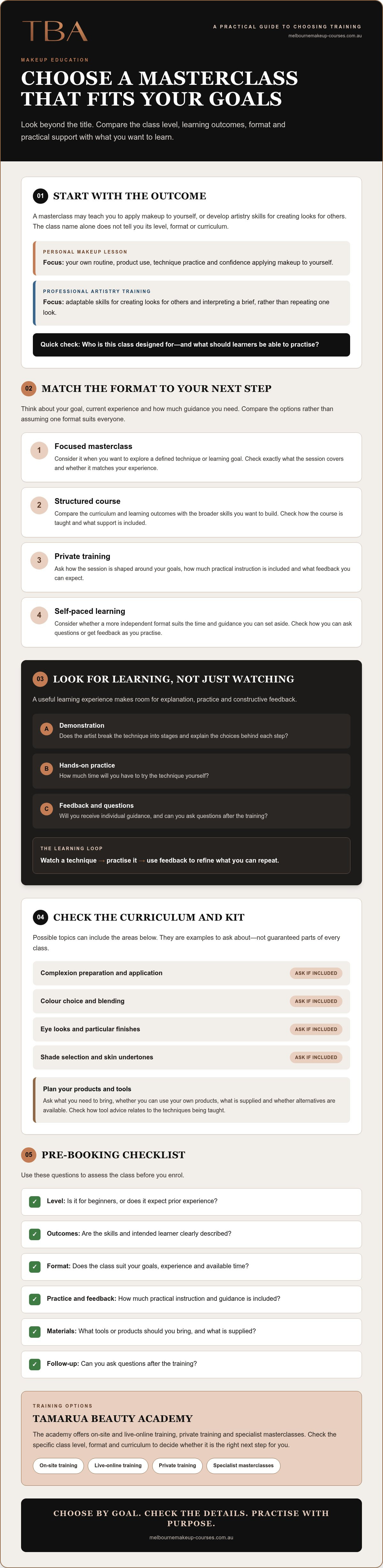
A clear course description helps you judge whether training fits your goals, experience and kit plans. Before enrolling, use this checklist to confirm what you’ll learn and what support you can expect.
Get specific before you commit. Ask which techniques the class covers, how learners practise them and whether activities are guided or independent. Check whether you should bring your own products or tools, whether anything is supplied and what’s optional. These answers can help you plan your kit without buying materials you may not need.
Look for clear information about the instructor’s relevant makeup experience and teaching background. Ask how learners receive feedback, raise questions and get support if a technique feels challenging. If a free consultation is available, use it to discuss your goals and whether the training seems suitable. Tamara Beauty Academy offers free consultations to help learners explore their next training step.
A provider should be able to explain the class level, outcomes, format and support clearly. Ready to explore training options? Explore makeup courses and check which learning pathway aligns with the skills you want to develop.
Choosing training is easier when you can talk through what you want to learn, what experience you have and how you’d like to use your skills. Tamara Beauty Academy offers on-site and live-online training, as well as private training and specialist masterclasses. These are academy-wide options, so check the details of any specific makeup masterclass to see whether it suits your goals.
You don’t need to have your whole career mapped out before asking questions. You might want to feel more confident applying makeup to yourself, strengthen particular artistry skills or explore broader training. Being clear about your aim can help you compare options and avoid enrolling in a class whose level or outcomes don’t match what you’re looking for.
Before an initial conversation, note your current experience and the skills you hope to develop. You might want to refine personal techniques, build skills for creating looks for others or find out whether broader makeup training is a sensible next step. Explain what you already know, what you’d like to practise and how you prefer to learn. The academy can help you explore relevant options, but the right fit depends on the details of each course and your needs.
Ask about the specific course’s level, format, curriculum and learning support. If practical work, individual feedback or a certificate matters to you, confirm whether it’s included rather than assuming it comes with every class. A clear conversation can help you understand what’s offered and what else you need to know before enrolling.
It’s reasonable to ask questions before committing to training. Discuss your goals and check the course level, format and available support, including how to get help if you’re unsure which option to consider. Tamara Beauty Academy offers free consultations, so you can talk through your training interests before deciding what to explore next.
Choose a next step that reflects the skills you want to build, whether you’re considering a focused class or broader learning. Explore makeup training options and enquire with the academy to discuss your goals and ask which training may be relevant.
The right makeup masterclass aligns with what you want to learn, your current experience and how you learn best. Before enrolling, look beyond the title: check the class level and outcomes, then ask how demonstrations, practice, feedback and learning support work. A focused class may help you develop a particular skill, while broader training may suit goals that call for stronger foundations.
Tamara Beauty Academy offers on-site and live-online training, alongside private training and specialist masterclasses. Free consultations and student support are available, so you can discuss your goals and ask questions as you explore your options. Confirm the format and details of the specific training you’re considering.
Ready to take a considered next step? Explore makeup training options and enquire with the academy to discuss your goals and find out which training may suit you.
Topics vary by provider and class. Examples might include complexion preparation, foundation shade selection, blending, colour choices or eye makeup, but these aren’t guaranteed inclusions. Check the course outline to see which techniques are actually covered. Ask whether each skill is demonstrated, practised by learners and followed by feedback, so you know what the learning experience involves before booking.
A masterclass commonly focuses on a defined skill or topic, while a course may offer broader or more structured learning. Providers use these terms differently, so the name alone won’t tell you how comprehensive the training is. Compare the stated outcomes, practice opportunities and support to judge whether the option suits a specific learning goal or a wider plan to build makeup skills.
One class may help you develop a particular technique, but it won’t automatically provide every skill needed for professional makeup work. Consider the foundations you’ll need, opportunities to practise and the time required to build a portfolio. Check exactly what the class covers and what it doesn’t, then explore any further training relevant to your goals. Don’t assume that attending one class guarantees employment or a qualification.
Start with a clear goal, then check the class level, learning outcomes and the instructor’s relevant experience. Ask how much practice is included, whether feedback is available and what products or tools you’ll need to bring. Check what learner support is offered if you have questions. Compare the training details rather than relying on the word “masterclass” or promotional descriptions to decide whether it’s right for you.
Either format can be useful, depending on the teaching design, your goals and how demonstrations, questions and feedback are handled. Live-online learning may offer flexibility, while on-site training may make direct interaction easier, but neither format guarantees a particular experience. Before enrolling, ask how learners practise, how they communicate with the instructor and what support is available. Confirm the format of the specific class, as providers may offer different options.
Certificate arrangements vary between providers and classes, so check directly before enrolling. Ask whether you’ll receive a document, what it records and whether it represents attendance, completion or a formal qualification. These terms aren’t interchangeable, and the class title alone doesn’t confirm what recognition is provided. If you’re considering training with Tamara Beauty Academy, confirm the certificate details for the specific class before relying on any claim about certification or completion.