Awarded Top 4 Education Facility in Australia by the MAGAP (Asia Pacific)


When comparing beauty courses options, the most comprehensive-sounding course isn’t automatically the right first step. The best fit depends on the skills you want to build, the way you learn and where you hope those skills will take you. A focused workshop may suit one goal, while broader vocational study may be a better match for another.
It’s understandable to feel unsure when course names and formats can be hard to compare. You’ll want to know what you’ll practise, how much guidance you’ll receive and exactly what credential you’ll have when you finish. Hands-on learning matters, but so does choosing a discipline that genuinely interests you, whether that’s makeup, hair styling, nails, facials, eyelash extensions, barbering, spray tanning or waxing.
This guide will help you weigh up short courses, workshops, master classes and longer study, then check practical training, student support, delivery options and completion credentials before deciding. Tamarua Beauty Academy offers onsite and live-online training across a range of disciplines. Course details vary, so confirm what applies to the option you’re considering. A calm, practical comparison can help you choose a suitable next step as you develop your skills.
Choosing a beauty discipline can feel exciting and a little overwhelming. Each pathway calls for a different blend of creativity, precision and client-focused practice. Start by listing the skills you’d enjoy developing, then consider how they connect to the kind of work you hope to pursue.
A short course is generally focused training in a particular skill area, while a broader vocational qualification may cover a wider programme of study. The title alone doesn’t tell you what you’ll learn or what credential you’ll receive. Check the course content and completion details before enrolling. For wider context on the field and its specialities, see this overview of Cosmetology.
In brief: A focused skills course develops a particular area of practice, while a broader qualification covers a wider programme of learning. They aren’t interchangeable, and the credential depends on the specific course.
Training options can centre on very different kinds of craft. The exact content varies by course and provider, but these disciplines offer a useful starting point:
These are distinct pathways, not a promise that every course covers every technique. Read the individual course outline and note which skills are included before comparing options.
Begin with an honest question: which services would you enjoy practising repeatedly, and which would you hope to offer in your intended work? Creative interest matters, but so do practical considerations, such as the specific skills your plans call for and any preparation a course expects.
For example, someone drawn to shaping a complete look may explore makeup, while a learner who prefers detailed, precise work might investigate nails or eyelash extensions. These are prompts for discovery, not fixed rules. Shortlist one primary skill area first, then compare providers on course content, practice opportunities, support and credentials.
Practical training is more than watching a technique being performed. It combines a clear demonstration with guided practice, opportunities to repeat the skill and constructive feedback that helps you refine your approach. Theory can explain the purpose behind each step, while practising the technique helps you identify which parts you understand and where you may need more guidance.
For example, a makeup demonstration can show how products are applied, while practice gives you a chance to work on placement, blending and finish. Activities vary by discipline and course, so don’t assume every programme includes the same practice or assessment. Tamara Beauty Academy describes its training as including practical demonstrations and hands-on instruction. Check the details for your chosen course.
Ask specific questions before enrolling: How much time is set aside for practice? Will you receive individual feedback, and how is it provided? Are practice materials, models or equipment supplied, or will you need to arrange or bring anything yourself? The answers help you understand what the training involves and what you’ll need to prepare.
Confirm the answers for the particular course rather than relying on general descriptions. When comparing options, look for clear explanations of what learners actually do, how guidance is provided and whether the advertised delivery format suits the practical components.
A certificate of course completion and a nationally recognised qualification aren’t interchangeable. Ask the provider to name the exact credential issued, explain what you need to complete to receive it, and clarify whether the course is a nationally recognised qualification. For an example of a broader programme, Victoria University’s Diploma of Beauty Therapy course page outlines information to review when comparing course structure and practical components.
Be cautious about inferring employment outcomes, licensing eligibility or professional recognition from a course title alone. These depend on the specific credential and intended work, so seek course-specific information and verify any requirements that matter to your plans.
Before enrolling, confirm the practical activities, practice time, feedback, materials or equipment required, delivery format and exact completion credential in writing. This makes it easier to compare what courses provide, rather than relying on how they’re described. To explore possible pathways, browse the beauty course options and check the practical details for the course that interests you.
A clear comparison makes it easier to see what a course actually offers, beyond its title or promotional claims. Record the same details for each option, and ask the provider to confirm anything that’s unclear in writing. This is especially useful when comparing courses with different formats or learning outcomes.
| What to compare | Questions to ask |
|---|---|
| Course content | Which skills and learning outcomes are covered? |
| Practice | What practical activities are included, and what materials or equipment are needed? |
| Feedback | Who gives guidance, and how will you receive feedback on your work? |
| Format | Is the course onsite, live-online or one-on-one, and how does that affect practice? |
| Support | What help is available before and during the course? |
| Credential | What exact certificate or qualification is issued, and what does it represent? |
Compare like with like: a focused workshop and a broader qualification may have different aims, content and credentials. Reviews and testimonials can help you understand other learners’ experiences, but they can’t guarantee the same outcome for you. Use them as one part of your research, alongside the written course information.
For career planning, keep course credentials separate from workplace conditions. The Fair Work Ombudsman’s Hair and Beauty Industry Award provides information about employment conditions, but it doesn’t confirm what a particular course credential means.
Ask for the learning outcomes, any course-specific prerequisites and a breakdown of theory and practical learning. Find out who provides instruction and what feedback or learner support is available. Before you commit, request the exact completion credential and ask what it does, and doesn’t, represent. Clear answers help you judge whether the training aligns with your next step.
Compare how you’ll interact with the instructor, practise skills and receive feedback. For live-online learning, ask how practical techniques are taught and assessed, and whether you’ll need specific equipment or to arrange practice independently. Tamara Beauty Academy offers onsite and live-online training, workshops, master classes and one-on-one learning. Availability and delivery details depend on the course. Explore its beauty course options as a starting point, then confirm the details that matter to you.
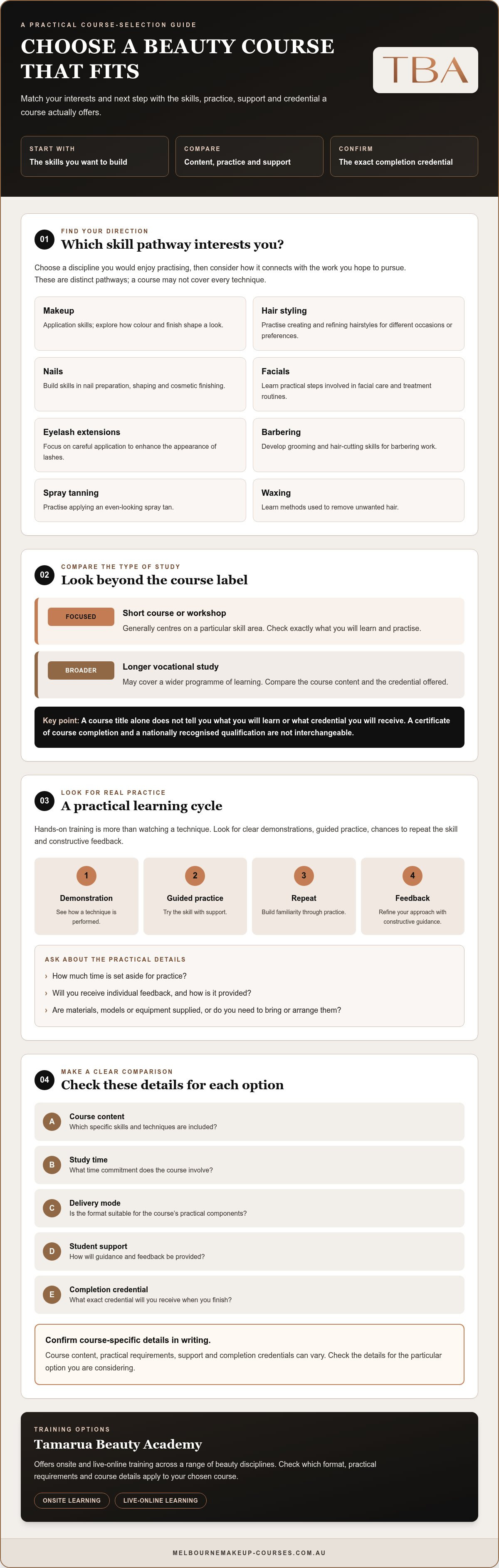
A course can suit your creative goals but still be the wrong fit for your week or preferred way of learning. Use this sequence to make a considered choice:
Be realistic about the time you can set aside for attendance and any practice or preparation outside training. Onsite and live-online formats can involve different ways of practising and interacting with an instructor, so ask what participation looks like for the specific course. Tamara Beauty Academy offers both formats, but delivery availability and practical requirements vary by course.
Confirm the schedule, delivery mode, prerequisites and what you’ll need to bring or arrange. Ask how to access learner support if questions come up during training, and request clear details about course content and the credential provided. If any answer feels vague, follow up before committing. A free consultation with Tamara Beauty Academy may help you discuss course fit and clarify what to verify for your chosen option.
You don’t need to have your whole career mapped out to take a practical first step. If you’re a beginner, ask what experience is expected and whether foundational skills are covered. Choose a manageable first discipline that genuinely interests you, then consider how it fits the work you have in mind. A course can help you develop skills, but it can’t guarantee a job or a particular career outcome.
Taking time to check the fit is part of building a strong foundation. If you’re ready to explore possible pathways, browse beauty course options and follow up on the schedule, delivery mode and preparation for the course that catches your eye.
You’ve now got a useful way to assess your options: choose a skill that interests you, check how practical learning works, verify the credential and make sure the course fits your goals and circumstances. That framework can help narrow your search without relying on a course title alone.
Tamara Beauty Academy offers training across makeup, hair styling, nails, facials, eyelash extensions, barbering, waxing and spray tanning. Its options include short courses, workshops, master classes and one-on-one training, with onsite and live-online formats available. Course content and delivery can vary, so check the details for the specific area and format you’re considering.
Explore the discipline that best suits the skills you want to develop, then look closely at what its course covers. The academy provides practical demonstrations and hands-on instruction as part of its training, but the activities and requirements depend on the individual course. Check the relevant course information for current delivery options, prerequisites, duration, practice requirements and the exact completion credential. Don’t assume one course’s details apply to another.
Shortlist an option that matches both your interests and how you prefer to learn. Before deciding, note down any questions about practical instruction, schedule, prerequisites, preparation and the credential you’ll receive. If course suitability or a detail remains unclear, Tamara Beauty Academy offers free consultations and student support, so you can ask about fit before making a decision.
There’s no need to have every career decision mapped out before you begin. A considered first step can help you build confidence in a specific skill and decide what you’d like to explore next. Take a look at the beauty course options, then get in touch to discuss which course may suit your learning goals.
Choosing the right course starts with the skill you want to develop. Compare what you’ll practise, how instruction and feedback are delivered, and the exact credential offered, then check that the course fits your schedule and plans. These are useful touchstones when exploring your options and deciding where to begin.
Tamara Beauty Academy offers practical instruction across multiple beauty disciplines, with course options and learning formats to suit different interests. Founded in 2010 by director Maggie Tamarua, the academy also provides free consultations and student support, giving you an opportunity to ask questions about course suitability before deciding.
Ready to explore? Explore beauty courses and find a creative next step, then check the details of the option that interests you. Your next step doesn’t need to map out your whole career. Start with one skill that inspires you, and build from there with confidence.
Beauty training in Australia can focus on skills such as makeup, hair styling, nails, facials, eyelash extensions, barbering, waxing and spray tanning. The subjects and depth of training vary by provider and course, so check individual outlines rather than assuming every programme covers the same techniques. Tamara Beauty Academy offers courses across these disciplines, with options including short courses, workshops, master classes and one-on-one training.
Not automatically. A short course may provide a certificate of completion without being a nationally recognised qualification, and course titles alone don’t confirm which credential you’ll receive. Before enrolling, ask the provider to identify the exact credential and explain what it represents. If nationally recognised study matters for your plans, request course-specific confirmation and check the relevant training information rather than relying on general promotional wording.
Yes, some providers offer beauty training through live-online learning, but the delivery format and practical requirements depend on the course. Ask how demonstrations are delivered, whether you’ll practise techniques during training, what equipment or materials you need, and how you can receive instructor feedback. Tamara Beauty Academy offers live-online courses in some areas. Confirm availability and how hands-on learning works for the specific course you’re considering.
It depends on the course. Some training may suit learners developing foundational skills, while other options may expect prior knowledge or experience. Before applying, check the entry requirements and ask what you should already know, particularly if you’re new to beauty or changing careers. If prerequisites aren’t clearly stated, contact the provider to confirm them. You can then choose a starting point that feels appropriate for your current skills.
Look for clear course content, practical learning opportunities, instructor feedback, a suitable delivery format, learner support and a clearly stated completion credential. Compare providers using the same questions so you can judge what each option includes. Check prerequisites, schedule, practice materials and any preparation required, then ask for unclear details in writing. A well-described course makes it easier to assess whether it matches your learning goals.
A beauty course can help you develop skills in a chosen discipline, but completing one doesn’t guarantee employment or a particular career outcome. Consider the work you hope to pursue, then check whether the course content and credential are relevant to that direction. Ask what you’ll practise and what completion means. Building professional confidence takes more than choosing a course, so treat training as one considered step in your wider career plan.
Choose by comparing how each format supports your learning. Onsite training may offer in-person interaction, while live-online study involves learning remotely. Practical activities and instructor feedback can differ by course. Ask how techniques are demonstrated and practised, what equipment you’ll need and how questions are handled. Tamara Beauty Academy offers both formats, but availability varies, so confirm the delivery mode and practical requirements for your chosen course before enrolling.